
Criminal Court Records in Custer County
A criminal court record opens the day the state files a charge. The Custer County Court Clerk records, files, and keeps the permanent record of every District Court case. That office runs the criminal division along with the civil, probate, juvenile, and small claims dockets. Each filing, motion, and order lands in the file. The clerk also keeps the appearance docket, which is the dated log of every step in the case.
Oklahoma tries most crimes in its District Courts. Custer County District Court sits in Arapaho and hears both felony and misdemeanor cases. Felony files often carry a CF prefix. Misdemeanor files often carry a CM prefix. Serious federal crimes are a separate track. Those cases go to the U.S. District Court for the Western District of Oklahoma and are handled by federal prosecutors, not the county.
The federal side is run by the U.S. Attorney for the Western District of Oklahoma, whose office is profiled on the U.S. Attorney Western District of Oklahoma page.
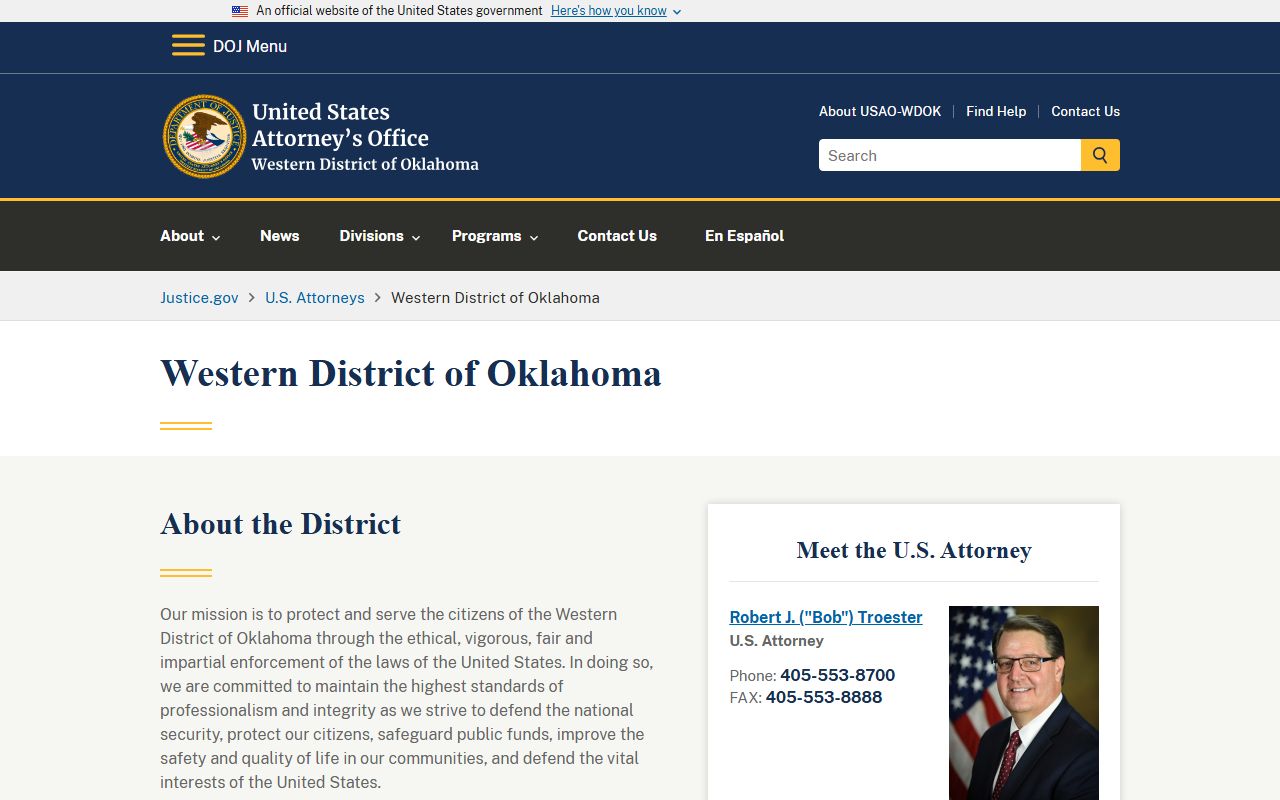
State charges stay in the county file, so most local searches start with the District Court, not the federal court.
How to Search Custer County Criminal Court Records
Two official portals carry Custer County District Court cases. OSCN is the Oklahoma State Courts Network, the state's own docket system. ODCR is the On Demand Court Records portal the Court Clerk and county website link as "Court Records." Both are free. Both let you search by name or by case number. The clerk counter still fills the gaps, since older files, sealed matters, and certified copies are not always online.
- Open OSCN docket search or the ODCR court search.
- Search by the defendant's last and first name, or enter a case number.
- Choose Custer County District Court and narrow by case type and filing date.
- Open the matching case to read the docket entries and the disposition.
- Call or visit the Court Clerk for a certified copy or a record not shown online.
ODCR carries Custer County records back to August 21, 2001 and refreshes them every hour. A statewide criminal history is a different product. That history runs through the Oklahoma State Bureau of Investigation, not the county docket. The court file shows one case at a time, while the state history pulls reported records together.
Stages of a Custer County Criminal Case
A criminal case moves in steps, and each step leaves a mark in the record. The file starts when the prosecutor files a charge. The defendant is then arraigned and enters a plea. Pretrial motions and hearings follow. The case ends with a plea or a trial, then a disposition and a sentence. Reading the docket in order shows exactly where a case stands.
Case flow: Charges Filed › Arraignment › Pretrial / Motions › Plea or Trial › Disposition › Sentencing
| Stage | What Happens |
|---|---|
| Arraignment | The defendant hears the charges in open court and enters a first plea of guilty, not guilty, or no contest. |
| Pretrial / Motions | Lawyers file motions, share evidence, and argue legal points. The judge sets hearing and bond terms. |
| Plea or Trial | The case ends by a plea deal or goes to trial, where a judge or jury weighs the proof. |
| Sentencing | After a plea or guilty verdict, the judge sets the sentence, which can include jail, fines, or probation. |
What a Custer County Criminal Court Record Shows
The file is built from many small fields. Each one answers a plain question about the case. Together they tell the full story, from the charge to the sentence. The table below lists the fields you are most likely to see on OSCN or ODCR for a Custer County criminal case.
| Field | What It Shows |
|---|---|
| Case Number | The unique case ID, such as a CF felony or CM misdemeanor number tied to the filing year. |
| Defendant | The person charged, along with the district attorney, arresting officer, and arresting agency. |
| Charges | The title of each offense, its level, and the statute it is filed under. |
| Plea | How the defendant answered the charge: guilty, not guilty, or no contest. |
| Disposition | The current or final outcome of each charge in the case. |
| Sentence | The penalty set after a plea or guilty verdict, such as jail, fines, fees, or probation. |
Docket entries fill in the rest. They log motions, hearings, continuances, orders, and payment notes in date order. A bond amount may appear when set. Bench warrant and failure to appear notes can show up in the docket text.
Charges vs. Convictions in Custer County
Being charged is not the same as being convicted. A charge is an accusation. A conviction is a finding of guilt by plea or verdict. A criminal court record can show charges that were dropped, dismissed, or ended in acquittal. Reading the disposition for each count matters more than reading the first charge alone. The charges as filed live in closer detail on the Custer County arrest records and court charges page.
| Charge | Conviction | |
|---|---|---|
| Stage | Accusation at filing | Verdict or plea of guilt |
| Burden of Proof | Probable cause | Beyond a reasonable doubt |
| Outcome | Can be dropped or dismissed | Leads to a sentence |
| Public Record | Yes | Yes |
Reading Custer County Dispositions and Sentences
The disposition is the heart of a closed case. It states how each charge ended. Common terms include guilty, not guilty, dismissed, and no contest. Oklahoma also uses the deferred sentence. A deferred sentence can end in dismissal and later sealing if the defendant meets every term set by the court.
The sentence sits next to the disposition for any count that ended in guilt. It can list jail or prison time, a fine, court costs, and probation. A suspended sentence holds part of the time over the defendant's head during supervision. Payment plans and fee balances may appear in the docket. When the record is unclear, the Court Clerk can confirm the current status of a Custer County case.
Note: A deferred sentence in Oklahoma is not a conviction at filing, yet it still appears in the public docket until a court seals the record.
Custer County District Attorney and Defense
Two offices shape almost every criminal file. The district attorney decides what to charge and prosecutes the case for the state. A defendant who cannot afford a lawyer may get a public defender. Both offices appear as parties in the docket. Knowing who to call helps when the online record leaves a question open.
Angela Marsee serves as District Attorney for District 2, which covers Custer, Beckham, Ellis, Roger Mills, and Washita counties. Custer County indigent defense runs through the Oklahoma Indigent Defense System, with a non-capital trial office in Clinton. The two contact blocks below come from the official state pages.
District Attorney, District 2
PO Box 36
Arapaho, OK 73620
580-323-3232
Fax 580-323-9377
OIDS Non-Capital Trial, Clinton
823 Frisco Ave
Clinton, OK 73601
580-323-2951
Fax 580-323-0982
Warrants in a Custer County Criminal Case
Warrants often tie back to a criminal file. A judge can issue a bench warrant when a defendant misses court or breaks a term. The docket may carry failure to appear, or FTA, language when that happens. An arrest warrant flows from probable cause on a new charge. These notes ride inside the case record rather than in a separate public list.
Custer County has no standalone public warrant search on the sheriff site. The path runs through the court docket and direct contact instead. The steps for checking and clearing one live on the Custer County warrant records page. Ignoring a warrant only adds cost and risk, so confirming the court and bond first is the safer move.
Sealed vs. Expunged Criminal Records
Some criminal records can leave the public view. Oklahoma uses two ideas that sound alike but differ. A sealed record is hidden from public search. An expunged record is treated as if it never existed for most purposes. The Oklahoma State Bureau of Investigation explains how expungement removes court or arrest records from public access.
The OSBI walks through how a court order seals an eligible record, as shown on its criminal history record expungement page.
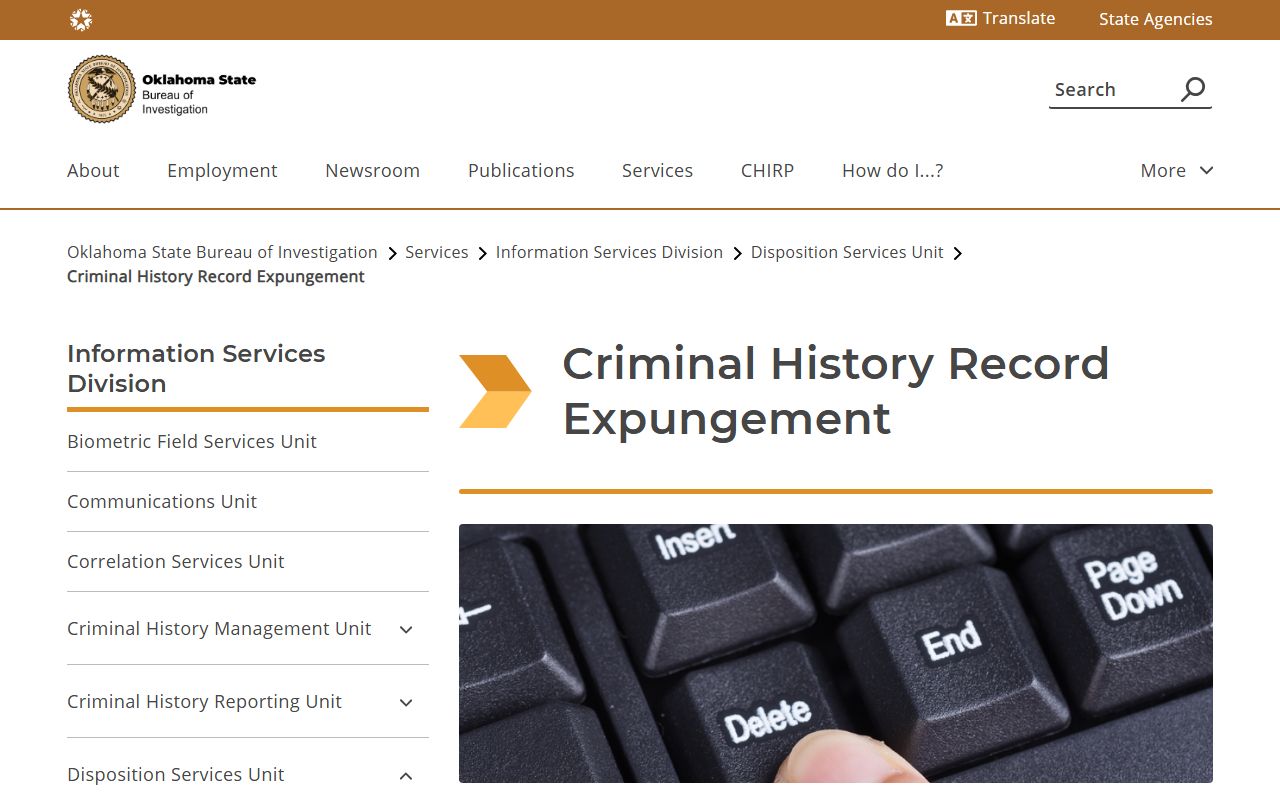
After an order is granted, the record should drop out of OSCN and ODCR searches for the public.
| Sealed | Expunged | |
|---|---|---|
| Visibility | Hidden from public view | Treated as never having existed |
| Law Enforcement | Limited access | Very limited access |
| Oklahoma Basis | Court order under 22 O.S. §§ 18-19 | Court order under 22 O.S. §§ 18-19 |
| Eligibility | Dismissals, deferred cases, set time periods | Qualifying arrests and convictions per statute |
Public Access to Criminal Court Records
Oklahoma law leans toward open court records. The Open Records Act sets the policy and the few exceptions. Criminal case files are open unless a separate law makes them confidential. Posted clerk hours shape in-person access, since the law ties inspection to regular business hours. Expungement and juvenile statutes carve out the main exceptions.
Key Statutes:
51 O.S. § 24A.5 - Keeps records open unless another law marks them confidential or exempt.
22 O.S. §§ 18-19 - Lets eligible criminal and arrest records be sealed from public view by court order.
10A O.S. § 2-6-109 - Allows qualifying juvenile records to be expunged under separate juvenile-code rules.
Background Check Considerations
A docket search and a formal background check are not the same thing. A court file shows one case. A background check pulls many records into a report and falls under federal rules. Employers, landlords, and lenders who screen people must follow the Fair Credit Reporting Act. A casual lookup on OSCN or ODCR does not meet that standard. For a screening decision, use a licensed consumer reporting agency.
Important: This is not an FCRA-regulated consumer reporting agency, and its records may not be used for credit, employment, tenant, or insurance screening.
Restricted Criminal Court Records in Custer County
Open access still has limits. Juvenile cases sit outside the ordinary public docket. Sealed and expunged files drop out of search after a court order. Some details inside an open file are hidden too. Social Security numbers, financial account numbers, and protected addresses are redacted. Victim and minor information may be withheld.
Ongoing matters can also stay quiet for a time. A search warrant may be sealed until it is returned. To reach a restricted file, a person usually must be a party, an attorney, or an agency, or hold a court order. The Custer County Court Clerk can explain what is available and how to request a sealed or older record.